Private school students do not automatically gain an academic advantage simply by spending more years in the classroom. What those years can buy is cumulative exposure to instruction, relationships, and school resources—but the benefit depends on attendance, teaching quality, student needs, and what “private school” means in a particular comparison. National data show that private-school enrollment is a small, diverse part of U.S. education, while research comparing private and public outcomes finds that apparent advantages often shrink when researchers account for family background and student selection. Understanding the difference between years enrolled, instructional time, and learning gained helps families evaluate school choices more realistically.
Private school years and student learning: what duration measures
A “year in the classroom” is a period of enrollment and instruction, not a standardized quantity of learning. For a private-school student, the measure can refer to years attended, days present, hours of instruction, or cumulative exposure to a particular curriculum. These are related but not interchangeable: a student enrolled for ten years may have experienced interrupted attendance, while another student may make substantial progress in fewer years because instruction closely matches their needs.
The National Center for Education Statistics (NCES) reported that about 4.7 million U.S. students attended private elementary and secondary schools in fall 2019, roughly 9% of all elementary and secondary students. Private schools vary widely—from religious schools to independent day and boarding schools—so enrollment duration alone cannot describe what a student receives. A useful assessment separates four related measures: years enrolled, attendance, instructional conditions, and outcomes such as achievement or graduation.
Years enrolled: cumulative exposure, not a guaranteed result
Years enrolled means the span of time a student attends a school or school system. Longer enrollment can provide continuity in curriculum, peer relationships, and teacher knowledge of a student’s progress. It does not, by itself, establish that the student learned more than a comparable student elsewhere. Achievement reflects prior preparation, family circumstances, school resources, instruction, attendance, and individual learning needs as well as time.
That distinction matters when families compare school profiles. A high test score among long-enrolled students might reflect effective instruction, but it might also reflect admissions practices, family income, parental education, or the departure of students who are struggling. The Institute of Education Sciences’ National Center for Education Evaluation has cautioned that comparisons between private and public schools require attention to student and family characteristics, because the groups are not randomly assigned to schools.
Attendance and instructional time: the classroom time actually received
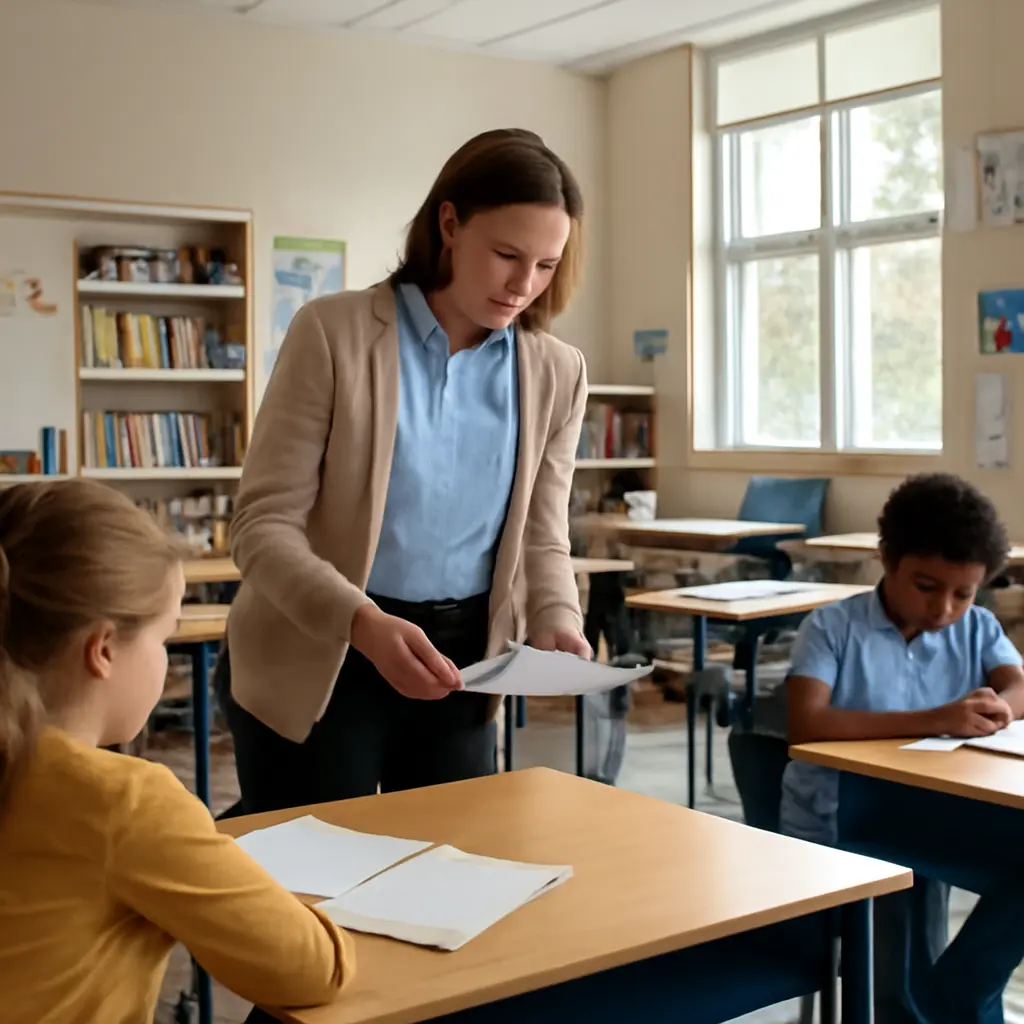
Attendance is the share of scheduled school days a student is present; instructional time is the time scheduled for teaching and learning. Both help explain what a year of enrollment delivers. A student who misses many days may receive less instruction than peers, while a school calendar with more scheduled days does not necessarily provide more effective teaching. Time-on-task, lesson quality, class organization, and opportunities for feedback also shape how much students learn.
The National Center for Education Statistics’ Schools and Staffing Survey documents variation in school organization and instructional conditions, while state attendance rules and school calendars determine local requirements. Families should therefore ask schools about attendance patterns and make-up support, not only the number of years students typically remain enrolled. A simple chart comparing years enrolled, days attended, and weekly instructional hours can help prevent these measures from being treated as if they were the same.
Instruction quality and private school years: how time becomes learning
Instruction quality is the extent to which teaching helps students understand, practice, and apply knowledge. It is the key link between classroom time and learning: added years create more opportunities to learn, but the instructional experience determines whether those opportunities are productive. The Education Endowment Foundation’s evidence summaries identify feedback, metacognition, and high-quality teaching practices among approaches associated with meaningful academic gains, while emphasizing that effects depend on implementation and context.
Private schools may offer different class sizes, schedules, curricula, enrichment, or student-support arrangements, but these features are not universal. The U.S. Department of Education’s Private School Universe Survey tracks school characteristics, including affiliation and grade span, illustrating why “private school” should not be treated as one uniform model. The practical question is not simply how long a student stays, but what instruction and support are available during those years.
Curriculum continuity and accumulated knowledge
Curriculum continuity means that instruction builds coherently from one grade to the next. When schools coordinate expectations and identify gaps during transitions, students can build foundational skills without repeatedly restarting or missing essential concepts. This is especially relevant in subjects such as mathematics and reading, where later learning depends on earlier knowledge.
The National Assessment of Educational Progress (NAEP), administered by NCES, reports student performance in subjects including reading and mathematics, but its results are snapshots rather than direct estimates of what an individual student gained from each year at a particular school. Families can use school-level curriculum information alongside student work, assessments, and progress reports to judge whether learning is accumulating. A consistent sequence is useful only when the school checks understanding and responds when students fall behind.
Class size, feedback, and individualized support
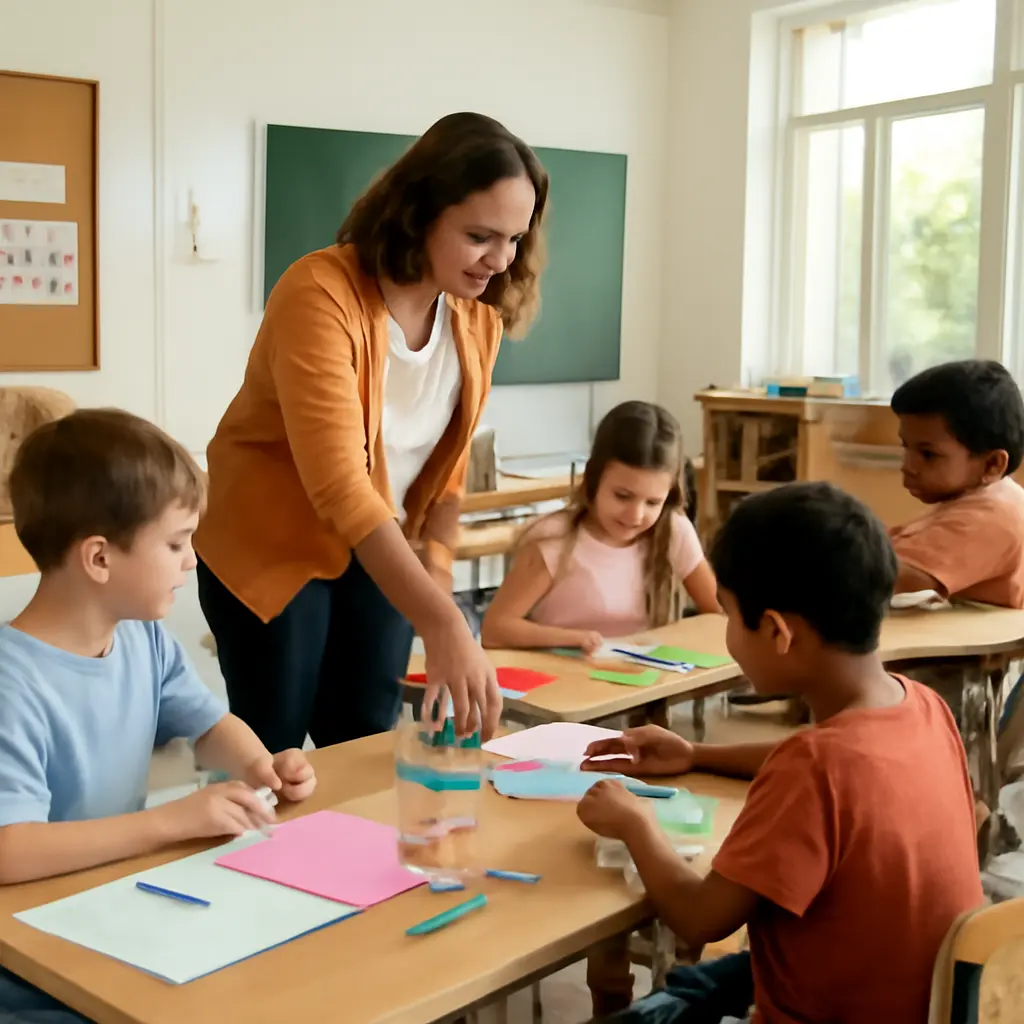
Class size is the number of students assigned to a class; individualized support includes tutoring, intervention, counseling, and adjustments for learning differences. Smaller classes can make it easier for teachers to notice questions and provide feedback, but class size alone does not guarantee stronger instruction. The National Education Association and education researchers have long treated class-size effects as dependent on factors such as grade level, teacher practice, and how a reduction is implemented.
A private school’s value over multiple years may therefore come from sustained access to a particular support system rather than from the calendar alone. Families should ask how teachers identify students who need help, how quickly interventions begin, and whether support continues across grade transitions. Those details reveal more about the likely benefit of additional years than a promotional claim about small classes by itself.
Enrichment, relationships, and student development
Enrichment includes activities such as arts, athletics, language study, clubs, and advanced courses; relationships include sustained connections with teachers and peers. Over several years, these experiences can help students develop interests, belonging, communication skills, and confidence. Such outcomes matter, but they should not be confused with measured academic achievement or assumed to occur equally at every private school.
The National Association of Independent Schools describes independent-school programs as varied in mission and educational approach. That diversity makes direct comparisons difficult: a school emphasizing arts or experiential learning may define success differently from one focused on exam preparation. Prospective families can ask which developmental outcomes the school prioritizes and what evidence—student portfolios, participation data, or follow-up surveys—it uses to evaluate them.
Private versus public school years: interpreting the evidence fairly
A private-public comparison asks whether students attending private schools achieve different outcomes from students attending public schools. It does not automatically answer whether private schooling caused the difference. Families choose schools, schools may apply admissions criteria, and students differ in income, prior achievement, parental education, location, and other characteristics before the comparison begins.
The U.S. Department of Education’s National Assessment of Educational Progress has published comparisons of student performance by school sector. Such descriptive results can show differences in average scores, but they do not isolate the causal effect of attending a private school for a given number of years. Research that adjusts for observed background factors can narrow some differences, yet unmeasured factors may remain. The clearest interpretation is that years in a private school can be associated with particular outcomes, while the size and cause of any advantage require careful study.
Selection effects and family background
Selection effects occur when students entering or remaining in different school sectors differ in ways that also influence educational outcomes. For example, families who can pay tuition may have different resources or educational preferences from families whose children attend public schools. Admissions, financial aid, school location, and student mobility can also shape who is represented in each group.
NCES reports on private-school enrollment and characteristics provide important context, but enrollment data alone cannot show what would have happened to the same student under another school option. Researchers use statistical controls and other designs to reduce this problem. When reading claims that private-school students “outperform” public-school students, look for whether the analysis accounts for prior achievement, socioeconomic background, and selection into schools—and whether it describes association or causation.
Outcomes beyond test scores
Educational outcomes include academic achievement, graduation, postsecondary enrollment, attendance, well-being, and preparation for work or civic life. Test scores offer one standardized indicator, but they do not capture every goal families may value. Conversely, broad claims about character or confidence should be supported with clear measures rather than treated as self-evident benefits of a school sector.
The NCES High School Longitudinal Study and other longitudinal research follow students over time, allowing researchers to examine how educational experiences relate to later outcomes. Even longitudinal evidence needs careful interpretation: students’ backgrounds, choices, and changing circumstances may affect both school attendance and later results. Families can make a more balanced judgment by reviewing achievement measures alongside graduation pathways, student support, and the school’s stated mission.
How families can estimate what additional private school years buy
Estimating the value of additional years means comparing the student’s likely learning and developmental experience with the cost, alternatives, and continuity involved. Tuition is only one part of the calculation; transportation, fees, financial aid, and the opportunity cost of family resources also matter. The decision is individual: the same school may be an excellent match for one student and a poor fit for another.
A practical evaluation combines evidence about teaching and support with the student’s own needs. The following questions help translate a school’s claims into observable information:
- What skills and knowledge should the student gain during the next year, and how will the school measure progress?
- How does the school respond to missed instruction, learning difficulties, or a student who is ready for more challenge?
- Do the curriculum, class organization, and support services remain consistent as students move between grades?
- What are the total annual costs, available aid, and likely costs over the number of years being considered?
- Can the school provide credible information about student progress, attendance, graduation, and postsecondary pathways?
A useful family case study is to compare a student’s baseline assessment with later work samples and teacher feedback across a school year. This does not prove that a particular school caused every gain, but it helps establish whether the student is progressing and whether the school is responding to needs. For school-level claims, seek methods and comparison groups as well as headline percentages.
Conclusion: years matter when they deliver sustained value
Years in the classroom measure exposure, not learning itself. For private-school students, additional years may buy curriculum continuity, attentive feedback, specialized support, enrichment, and lasting relationships—but only when those features are present and meet the student’s needs. Attendance and instructional quality shape how much of that opportunity is realized, while family background and selection effects complicate claims that private schooling alone causes stronger outcomes.
Families should compare the actual educational experience, student progress, and total cost rather than relying on years enrolled or sector-wide averages as proof of value. Review school data, ask how progress is measured, and discuss the student’s needs directly with educators. Further reading from NCES, NAEP, and the Institute of Education Sciences can help families distinguish descriptive statistics from evidence about what schooling changes.
Sources: National Center for Education Statistics, Characteristics of Private Schools in the United States: Results From the 2019–20 Private School Universe Survey, https://nces.ed.gov/pubsearch/pubsinfo.asp?pubid=2022035; National Center for Education Statistics, Private School Universe Survey, https://nces.ed.gov/surveys/pss/; National Center for Education Statistics, National Assessment of Educational Progress, https://nces.ed.gov/nationsreportcard/; U.S. Department of Education, Institute of Education Sciences, National Center for Education Evaluation and Regional Assistance, https://ies.ed.gov/ncee/; Education Endowment Foundation, Teaching and Learning Toolkit, https://educationendowmentfoundation.org.uk/education-evidence/teaching-learning-toolkit; National Center for Education Statistics, High School Longitudinal Study of 2009, https://nces.ed.gov/surveys/hsls09/; National Association of Independent Schools, About Independent Schools, https://www.nais.org/about/